Red Sea “Chariot Wheels”
Since 1978, divers have reported coral-covered shapes resembling chariot wheels in the Gulf of Aqaba near Nuweiba. No object has been made available for study, and archaeologists, including many who accept the Exodus, do not consider the claim evidence.
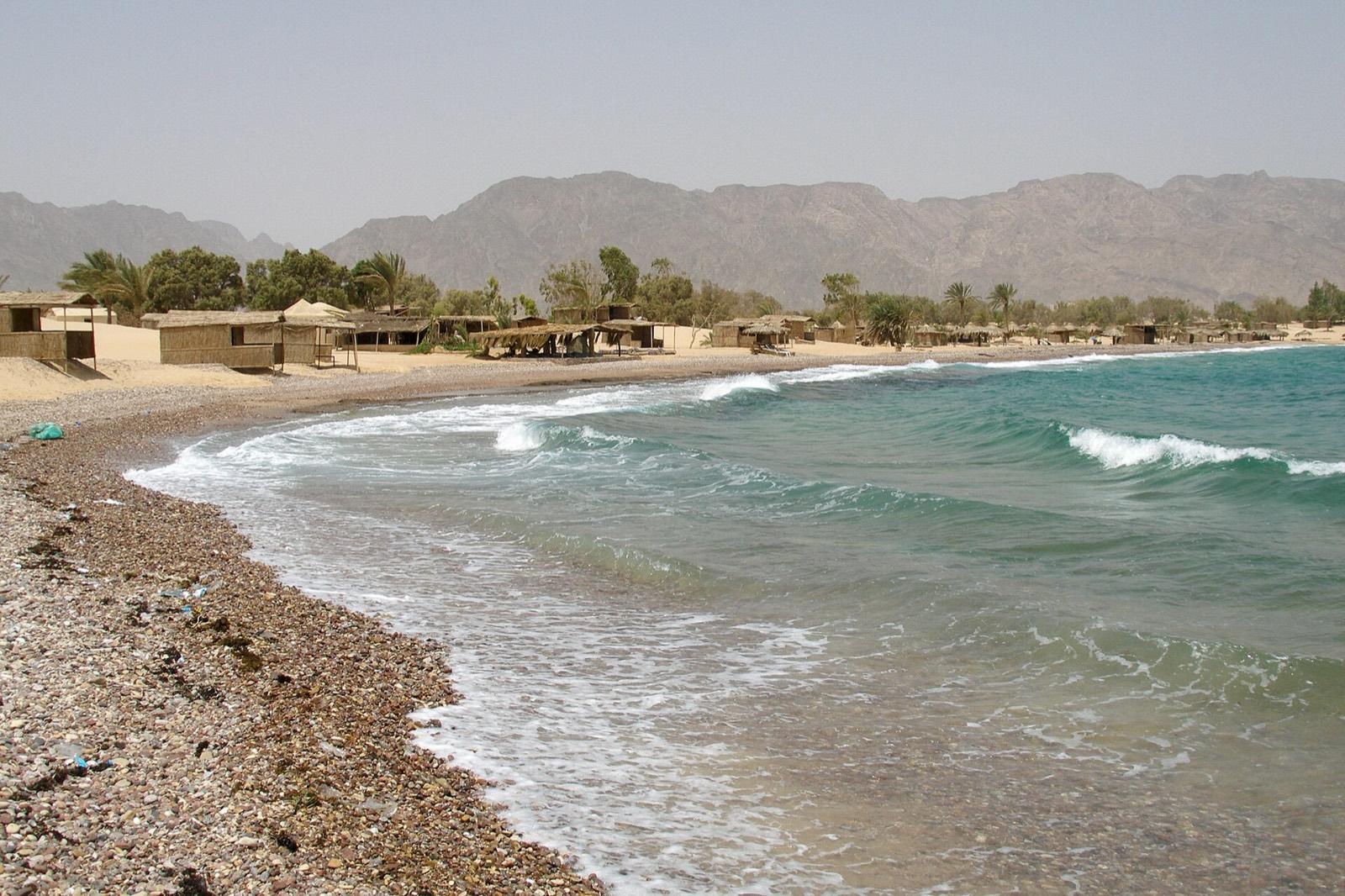

Exodus 14 tells how Israel crossed the sea on dry ground and how the returning waters covered Pharaoh’s chariots and horsemen. Where the crossing happened is unknown. The Hebrew yam suph (“Sea of Reeds,” traditionally “Red Sea”) has been placed at lakes near the Suez isthmus, at the Gulf of Suez and at the Gulf of Aqaba. Supporters of a crossing in the Gulf of Aqaba note that 1 Kings 9:26 uses yam suph for the gulf near Elath.
In 1978 Ron Wyatt, an American nurse anesthetist with no archaeological training, began reporting chariot wheels and bones on the floor of the Gulf of Aqaba off Nuweiba, a beach on the Sinai coast. By his own account he raised an eight-spoked wheel hub and took it to Nassif Mohammed Hassan, Egypt’s director of antiquities, who dated it to the 18th Dynasty because, Wyatt said, eight-spoked wheels were used only then. No record of that examination has been produced, and the hub has never been made available for study. The premise is also mistaken: Egyptian chariot wheels of that dynasty normally had four or six spokes. Wyatt also described gold-covered wheels on the seabed, none of which has been raised. Later divers and filmmakers have published images of coral-covered shapes that look like wheels and axles.
Archaeologists, including evangelical scholars at the Associates for Biblical Research, have rejected the claim, as have writers from Wyatt’s own Seventh-day Adventist church, such as Russell and Colin Standish. No artifacts have been raised for testing, Egyptian authorities have confirmed no finds, and coral grows over many shapes, natural and man-made. The Nuweiba crossing is tied to identifying Mount Sinai with Jebel al-Lawz in Saudi Arabia, which most scholars also reject.
Watch
Why it’s rated unverified
This rating covers the claim that chariot remains from the Exodus lie off Nuweiba. It rests on underwater photographs and video of encrusted shapes, and on reports about objects that have never been made available for study. No excavation, laboratory analysis or peer-reviewed publication supports it. A wheel-like shape under coral is not enough to identify a chariot, its date or its origin.
Unverified: Claims without recovered, published or independently examined evidence. About the ratings
In scripture
Timeline
- 1978Ron Wyatt reports chariot wheels off Nuweiba.
- 1999Ron Wyatt dies.
- 2002Lennart Möller’s The Exodus Case promotes the Nuweiba crossing.
Sources
- Hoffmeier, James K. Israel in Egypt: The Evidence for the Authenticity of the Exodus Tradition. New York: Oxford University Press, 1997. Link to this source
- Batto, Bernard F. “The Reed Sea: Requiescat in Pace.” Journal of Biblical Literature 102, no. 1 (1983): 27–35. Link to this source
- Standish, Russell R., and Colin D. Standish. Holy Relics or Revelation: Recent Astounding Archaeological Claims Evaluated. Hartland Publications, 1999.
- Franz, Gordon. “Is Mount Sinai in Saudi Arabia?” Bible and Spade 13, no. 4 (2000): 101–113. Link to this source
- Möller, Lennart. The Exodus Case. Copenhagen: Scandinavia Publishing House, 2002.
Last reviewed October 14, 2026.