The Walls of Jericho
Excavations at Tell es-Sultan have found a city destroyed by fire, with collapsed mudbrick walls. Archaeologists have argued for nearly a century over whether that destruction matches the date of Joshua’s conquest.
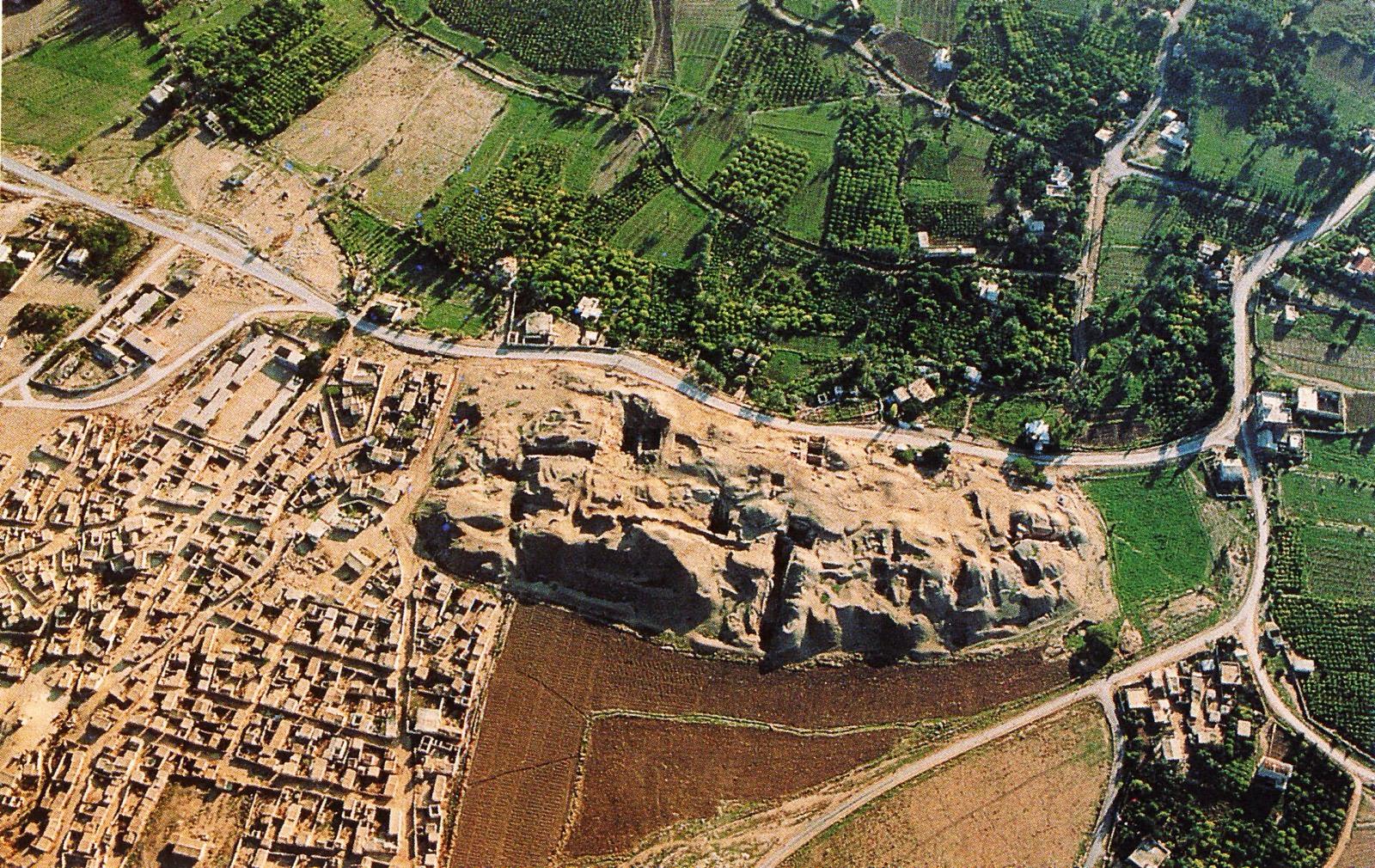

Tell es-Sultan, ancient Jericho, is one of the oldest settlements on earth, with remains reaching back before 8000 BC. Joshua 6 tells how its walls fell after Israel marched around the city for seven days, and how the city was burned (6:20, 24).
John Garstang excavated the mound from 1930 to 1936. He reported a fallen double wall and a burned city that he dated to around 1400 BC, and took them as confirmation of Joshua. Kathleen Kenyon dug from 1952 to 1958 with more refined methods. She concluded that Garstang’s walls were about a thousand years older, and that the last walled city (City IV) was destroyed around 1550 BC, with only slight occupation afterward.
In 1990 Bryant Wood of the Associates for Biblical Research re-examined the pottery and argued for a destruction around 1400 BC after all. He pointed to collapsed mudbrick at the foot of the city’s revetment wall, a destructive fire, and storage jars full of grain, which suggest a short siege soon after harvest, as Joshua 2:6 and 3:15 imply. Radiocarbon measurements on charred grain from the destruction, published by Hendrik Bruins and Johannes van der Plicht in 1995 and calibrated by them in 1996, point to the 16th century BC, supporting Kenyon; Wood has disputed how those results should be read. An Italian–Palestinian expedition, working since 1997, dates the destruction to about 1550–1525 BC and reports traces of a smaller Late Bronze Age settlement afterward.
Scholars who favor a 15th-century Exodus read the destruction as Joshua’s. Some who favor a 13th-century date, such as Kenneth Kitchen, argue that erosion removed most of the later city. Many critical scholars see Joshua 6 as a later theological account rather than a battle report, and see Israel as emerging largely from within Canaan. Tell es-Sultan was inscribed as a UNESCO World Heritage Site in 2023.
Why it’s rated debated
This rating covers whether the destruction matches Joshua’s conquest. The excavations are well documented; the disagreement is over dating. John Garstang, and later Bryant Wood, dated the destroyed city (City IV) to about 1400 BC, close to the conquest date implied by 1 Kings 6:1. Kathleen Kenyon’s pottery analysis and later radiocarbon tests dated it to about 1550 BC, leaving little or no walled city for Joshua. Most archaeologists accept the earlier date, including the current Italian–Palestinian expedition; Wood’s date is held mainly by scholars who favor a 15th-century Exodus.
Debated: Real evidence, but scholars disagree about its date or its connection to the biblical account. About the ratings
In scripture
Timeline
- c. 1550 BCCity IV is destroyed, by Kenyon’s dating and the radiocarbon results.
- c. 1400 BCCity IV is destroyed, by Garstang’s and Wood’s dating, which links it to Joshua 6.
- 1930–1936John Garstang excavates.
- 1952–1958Kathleen Kenyon excavates.
- 1990Bryant Wood argues for a destruction around 1400 BC.
- 1995–1996Radiocarbon dates of charred grain are published and calibrated.
- 1997An Italian–Palestinian expedition begins work.
- 2023Tell es-Sultan becomes a UNESCO World Heritage Site.
Sources
- Garstang, John, and J. B. E. Garstang. The Story of Jericho. London: Hodder & Stoughton, 1940.
- Kenyon, Kathleen M. Digging Up Jericho. London: Ernest Benn, 1957.
- Wood, Bryant G. “Did the Israelites Conquer Jericho? A New Look at the Archaeological Evidence.” Biblical Archaeology Review 16, no. 2 (1990): 44–58. Link to this source
- Bienkowski, Piotr. “Jericho Was Destroyed in the Middle Bronze Age, Not the Late Bronze Age.” Biblical Archaeology Review 16, no. 5 (1990). Link to this source
- Wood, Bryant G. “Dating Jericho’s Destruction: Bienkowski Is Wrong on All Counts.” Biblical Archaeology Review 16, no. 5 (1990). Link to this source
- Bruins, Hendrik J., and Johannes van der Plicht. “Tell es-Sultan (Jericho): Radiocarbon Results of Short-Lived Cereal and Multiyear Charcoal Samples from the End of the Middle Bronze Age.” Radiocarbon 37, no. 2 (1995): 213–220. Link to this source
- Bruins, Hendrik J., and Johannes van der Plicht. “The Exodus Enigma.” Nature 382 (1996): 213–214. Link to this source
- Nigro, Lorenzo, and Jehad Yasine. “Interim Report on the Excavations at Tell es-Sultan, Ancient Jericho (2019–2023): The Bronze and Iron Age Cities.” Vicino Oriente 29 (2024): 47–96.
- UNESCO World Heritage Centre. “Ancient Jericho/Tell es-Sultan.” Link to this source
Last reviewed October 14, 2026.