The Ark of the Covenant: What Became of It?
The Bible’s record of the Ark ends before the Babylonians destroyed Jerusalem in 586 BC, and no archaeological trace of it has been found. Many historians think it was lost or destroyed by then; traditions place it in Ethiopia, on Mount Nebo, in Babylon or beneath the Temple Mount.
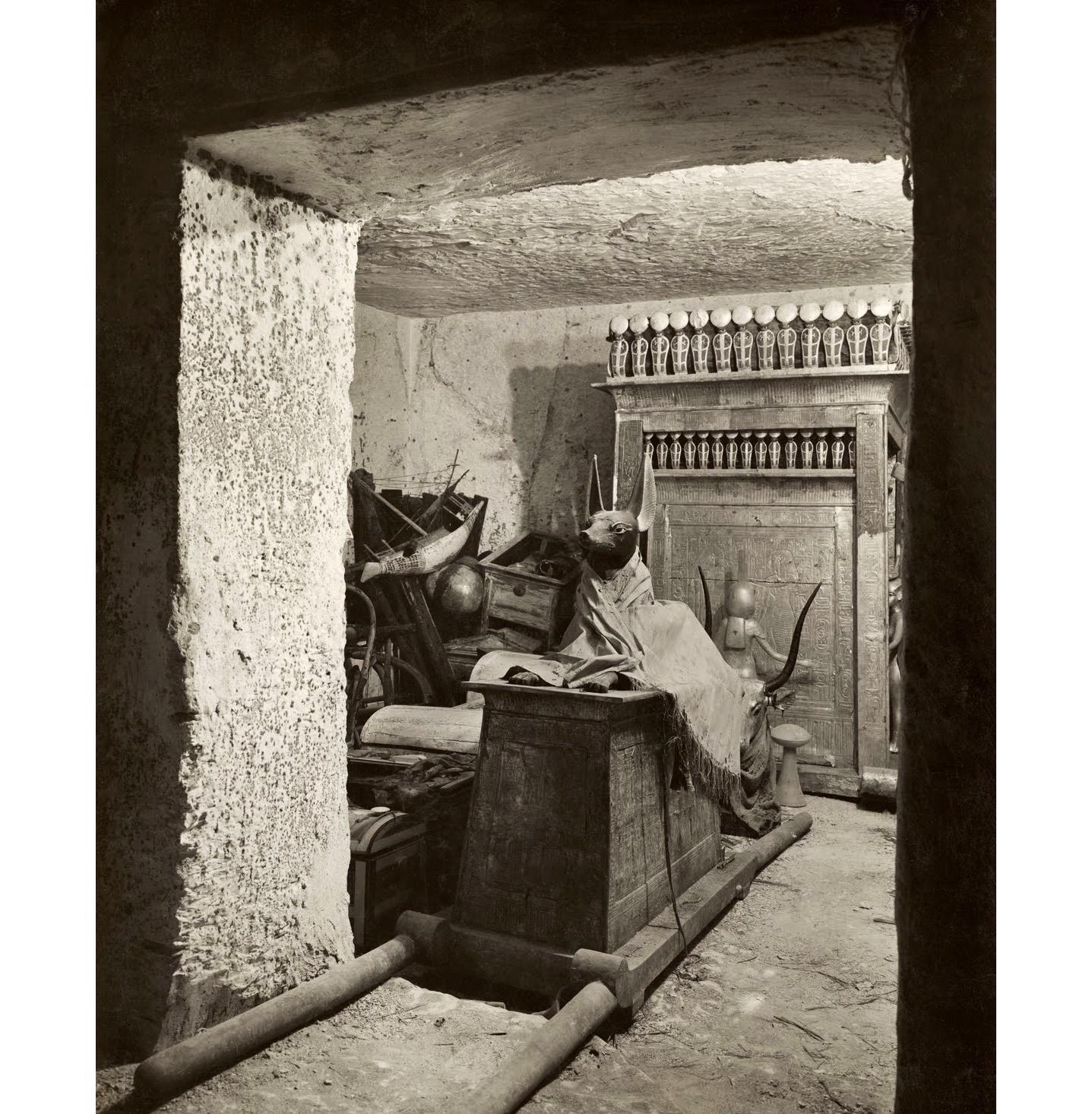

Exodus 25:10–22 describes the Ark as a gold-covered wooden chest, carried on poles, that held the tablets of the covenant. The Bible follows it from the wilderness to Shiloh, into Philistine hands, to Kiriath-jearim for twenty years, and finally into Solomon’s Temple (1 Samuel 4–7; 2 Samuel 6; 1 Kings 8). Its last narrative mention is Josiah’s order, around 622 BC, to put it back in the Temple (2 Chronicles 35:3).
When the Babylonians destroyed the Temple in 586 BC, 2 Kings 25:13–17 lists the Temple furnishings they carried off, mostly bronze but also gold and silver vessels, and does not mention the Ark. Jeremiah 3:16 speaks of a day when it will no longer be remembered or made again. 1 Esdras 1:54 and 2 Esdras 10:22 suggest it was taken or plundered, and 2 Maccabees 2:4–8 says Jeremiah hid it in a cave on Mount Nebo. Rabbinic sources record two views: that King Josiah hid it beneath the Temple, and that it was carried to Babylon (Talmud, Yoma 52b–54a).
The Ethiopian Orthodox Church holds that the Ark was brought to Ethiopia and is kept at the Church of Our Lady Mary of Zion in Aksum, where only one guardian monk may see it. The tradition is told in the Kebra Nagast, which says Menelik I, son of Solomon and the Queen of Sheba, brought it there. Every Ethiopian Orthodox church keeps a consecrated tabot, representing the tablets, at its altar. Historians date the Kebra Nagast in its present form to the 14th century AD; the church holds that it preserves older tradition.
Modern claims include Ron Wyatt’s report of finding the Ark in a cave near the Garden Tomb, a site some Protestants identify as Golgotha. He produced no clear photographs or artifacts, and the Garden Tomb Association says nothing was found. Archaeology has instead examined places in the Ark’s story. A 2017 excavation at Kiriath-jearim uncovered a large monumental platform on the hilltop, which the excavators date, mainly by pottery, to the first half of the 8th century BC and attribute to the northern kingdom of Israel. Egyptian finds, such as the carrying chest of Anubis from Tutankhamun’s tomb, are similar to the object the Bible describes.
Why it’s rated unverified
This rating covers claims to have found the Ark or to know where it is. There is no physical evidence of the Ark itself, and no modern claim to have found it has been substantiated. The Ethiopian Orthodox Church’s tradition is a matter of faith; by its practice the Ark is shown to no one, so it cannot be examined. Archaeology can show objects like the one Exodus describes and study places linked to it, but it cannot tell what became of it.
Unverified: Claims without recovered, published or independently examined evidence. About the ratings
In scripture
Timeline
- c. 960 BCSolomon brings the Ark into the Temple (1 Kings 8).
- c. 622 BCJosiah orders the Ark returned to the Temple (2 Chronicles 35:3).
- 586 BCThe Babylonians destroy the Temple; the Ark is not listed among the spoils (2 Kings 25).
- 2017Excavation at Kiriath-jearim, where 1 Samuel 7:2 says the Ark rested for twenty years.
Sources
- Munro-Hay, Stuart. The Quest for the Ark of the Covenant: The True History of the Tablets of Moses. London: I.B. Tauris, 2005.
- Finkelstein, Israel, Thomas Römer, Christophe Nicolle, et al. “Excavations at Kiriath-jearim near Jerusalem, 2017: Preliminary Report.” Semitica 60 (2018): 31–83. Link to this source
- Finkelstein, Israel, and Thomas Römer. Kiriath-jearim: The Shmunis Family Excavations. University Park, PA: Eisenbrauns; Tel Aviv: Institute of Archaeology, Tel Aviv University, 2025. Link to this source
- Griffith Institute. “Anubis shrine” (Carter no. 261), Tutankhamun: Anatomy of an Excavation. Link to this source
- Cline, Eric H. From Eden to Exile: Unraveling Mysteries of the Bible. Washington, DC: National Geographic, 2007.
- Babylonian Talmud, Yoma 52b–54a. Link to this source
Last reviewed October 14, 2026.